
Nurse Educator Blog
State of Nursing Education
The State of Nursing Education is the authoritative ATI series examining key issues affecting today’s academic nursing programs, deans and faculty.
Explore All ArticlesFaculty Development Is at Your Fingertips

How to Support Nurse Educators at Every Career Stage
Student success hinges on faculty success, but many new educators are set up to struggle. As schools recruit clinical nurses to address educator shortages, they're bringing in professionals who are skilled but often lack the teaching foundation needed to translate their clinical expertise into effective instruction. The solution requires rethinking how programs support faculty development from day one. 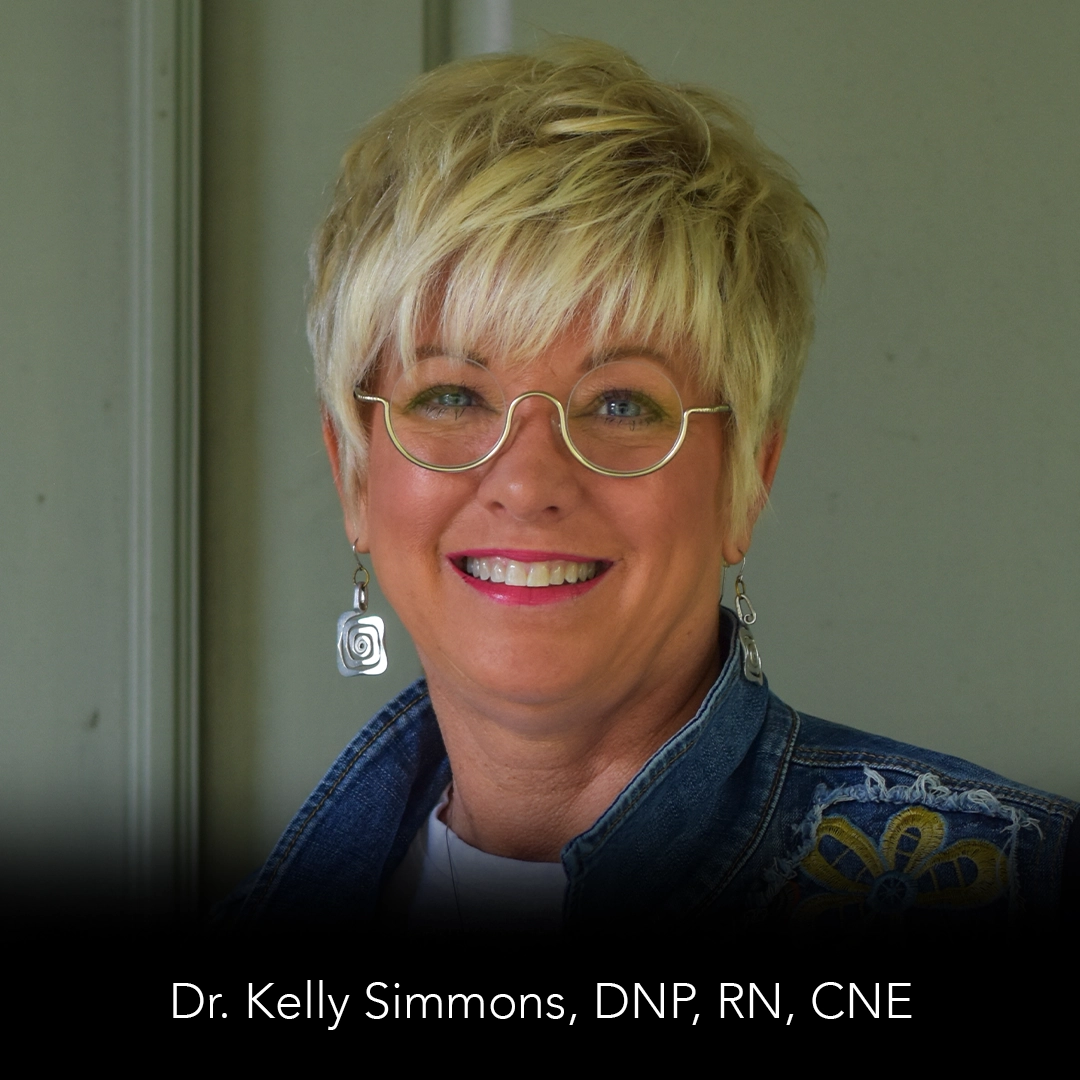
“We don’t have enough nurse educators who are prepared to teach. If our faculty can’t succeed, neither can our students,” said Kelly Simmons, DNP, RN, CNE, a nurse educator and former program director who is a nursing strategist at ATI Nursing Education
“We’re getting faculty from other areas of nursing — for instance, nurse practitioners, clinical nurse specialists, researchers — which is great. We need them,” Dr. Simmons continued. “But they come to the higher education setting without any teaching knowledge or experience. They’re great in clinical, but as far as pedagogy, andragogy — we have to figure out how to bring them up to speed.”
This article explores how a robust learning resource can address the skill and knowledge gaps among novice educators and support long-term growth, retention and satisfaction among all educators — from novice to emerging leader.

Rethinking Your Onboarding Process
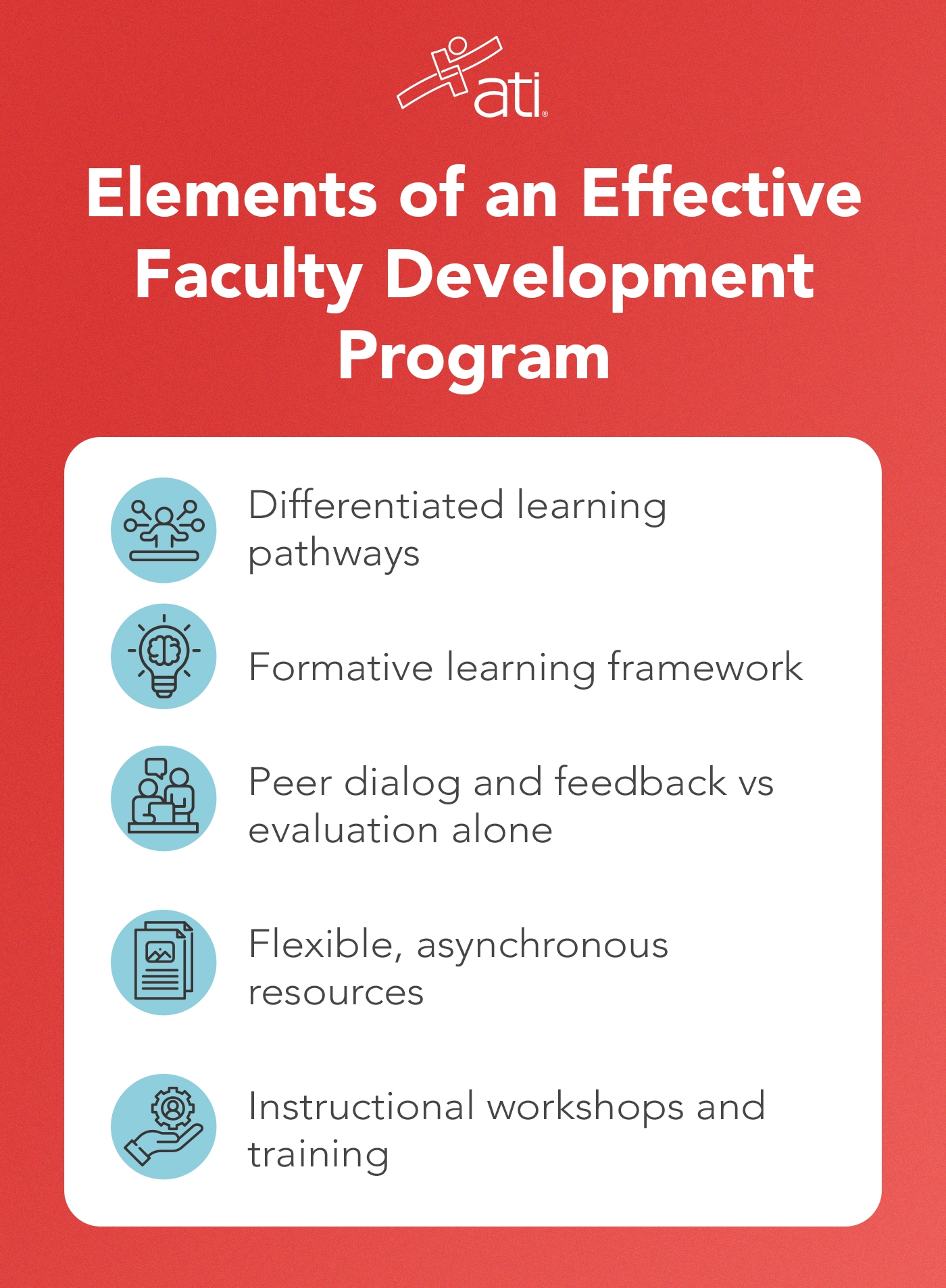
The challenges associated with faculty hiring highlight the need to revisit how schools introduce, support and prepare new educators. This starts with a more intentional onboarding process. A 2026 study1 concluded that faculty development programs that integrate features like those listed in the box below can enhance teaching effectiveness at all skill levels, especially for novice educators who are transitioning from the clinical setting
Traditional orientation or onboarding programs tend to focus more heavily on operations and logistics — things like program policy and learning management systems — than on pedagogical ability or development. Research shows that most onboarding programs are not as comprehensive or effective as they could or should be.2
 In today’s climate, the need for deeper assimilation through role-specific training, goal setting and performance check-ins is apparent. And that’s where a robust faculty development program can help.
Taking the time during the onboarding process to discuss educators’ familiarity with different teaching techniques, their knowledge of academic trends, and their comfort in their new role can pinpoint areas where new knowledge is needed. It will also help determine how new educators can get the most out of faculty development resources.
Responding to Educator Needs & Deficits
One such resource is ATI Academy. As an on-demand, asynchronous, evidence-based platform, “ATI Academy is a place where educators can go to truly learn,” Dr. Simmons said.
By helping faculty identify areas for improvement and delivering a content-rich resource to fill those gaps, faculty development is literally at educators’ fingertips — tailored to their needs and available anytime.
As Dr. Simmons explains: “They can ask themself, ‘What’s my knowledge gap? What do I need to educate myself on?’ Then, they can learn when and how best suits them.”
With the ability to sort, filter and choose courses that each user deems most relevant to their needs, ATI Academy delivers a personalized approach. But whatever pathway a user chooses, all content aligns with the most current and relevant issues impacting nursing education, including those listed in the box in the next section.
In addition to these topics, educators can access ATI Academy content to stay up to date on the latest ATI product developments through virtual training sessions.
ATI Academy contains more than 120 courses — all of which were developed to address educators’ real-life interests and needs.
“We do a lot of surveys, review the literature and attend conferences, where we listen to what people are talking about,” Dr. Simmons said. “We figure out what their needs and deficits are, and our content takes shape around that. We’re focused on what we can do to be most useful to the educators who rely on ATI.”
For example, a hot topic at the National Nurse Educator Summit in 2025 was faculty development and novice educators, and it prompted the rapid creation of new learning resources focused on this area.
“Everyone’s feeling the pain of the current shortage,” Dr. Simmons aid. “That’s why we’ve created a lot of content focused on addressing that pain point.”
Getting the Most Out of ATI Academy
Understanding what ATI Academy offers is just the beginning. Knowing how to use the platform effectively is what maximizes its impact. Thanks to its asynchronous nature, educators can use ATI Academy in multiple ways to meet their learning needs.
“It’s really about getting in there and using it how you want,” Dr. Simmons said. “You can sort courses by topic. You can start and stop a prerecorded course as you need, to come back to it when you can.” 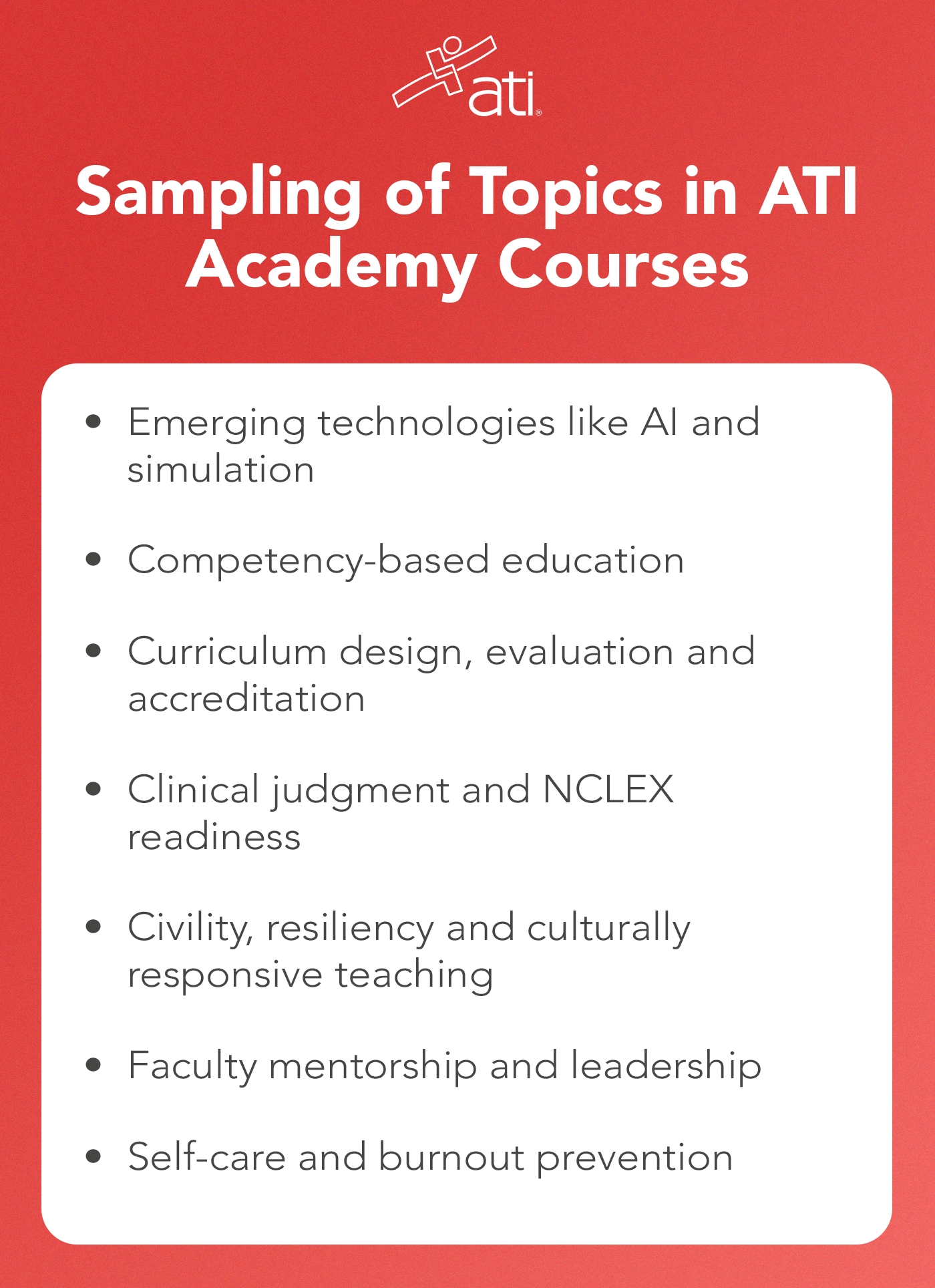
In a 2024 survey of faculty, educators cited an “unrealistic workload” as one of the main factors driving the nursing faculty shortage.3 Separately, a 2023 study4 determined that heavy workloads, in addition to stress and mental strain, can reduce educators’ motivation for continuing professional development.
A faculty development program that’s flexible, self-paced and low stakes is essential to overcoming these concerns. Educators already have enough on their plate. Having the autonomy to choose a course — whether bite-sized or in-depth — to address their specific needs is less daunting than being required to complete a set of standard courses.
Faculty Development at Every Stage — From Novice to Leader
The flexible features of ATI Academy do more than support day‑to‑day teaching. They also play a critical role in long‑term professional growth. An important aspect of this resource is that its value and impact aren’t limited to new educators.
“It supports faculty development at every stage, from novice educator to emerging leader,” Dr. Simmons said.
Many courses in ATI Academy provide contact hours, which are required for license renewals and recertifications. This is both an incentive for faculty to utilize the platform and a way for schools to attract and keep the best candidates.
Supporting faculty development is not just an effective way to retain talented educators. It’s also a strategy for developing new leaders, improving institutional culture, enhancing student outcomes, and remaining agile in a rapidly changing academic landscape.
Lifelong Learning is Key to Faculty Development
Ultimately, faculty development is not a moment in time but an ongoing commitment to shaping educators and the future nurses they develop.
“Nurses and nurse educators always need to be learning, to be improving,” Dr. Simmons said. “Because if the goal is a positive patient outcome, but we don’t know how to teach our students to perform in changing clinical settings or how to practice self-care, the end result suffers. It all starts with the educator.”
A faculty development program that includes the kind of benefits offered by ATI Academy — tailored learning opportunities, flexibility and autonomy, evidence-based instruction — can empower new and seasoned educators alike throughout their careers.
References
- Arnold T, Davis L, Harder, N. From clinician to educator. Nurse Educator.2026;51(1). https://doi.org/10.1097/nne.0000000000002022
- Cox CW, Jordan ET, Valiga TM, Zhou Q. New faculty orientation for nurse educators: Offerings and needs. Journal of Nursing Education. 2021;60(5):273-276. https://doi.org/10.3928/01484834-20210420-06
- Anderson M, Taylor N, Rowley T, Owens C, Iacob E. Understanding factors influencing nursing faculty departure and intentions. Nurse Educator. 2024;49(4):222-226. https://doi.org/10.1097/nne.0000000000001612
- Smith J, Kean S, Vauhkonen A, Elonen I, Silva SC, Pajari J, Cassar M, Martín-Delgado L, Zrubcova D, Salminen L. An integrative review of the continuing professional development needs for nurse educators. Nurse Education Today.2023;121:105695. https://doi.org/10.1016/j.nedt.2022.105695