
Nurse Educator Blog
State of Nursing Education
The State of Nursing Education is the authoritative ATI series examining key issues affecting today’s academic nursing programs, deans and faculty.
Explore All ArticlesThe Federal Budget and Nursing Education: What Program Leaders Need to Know
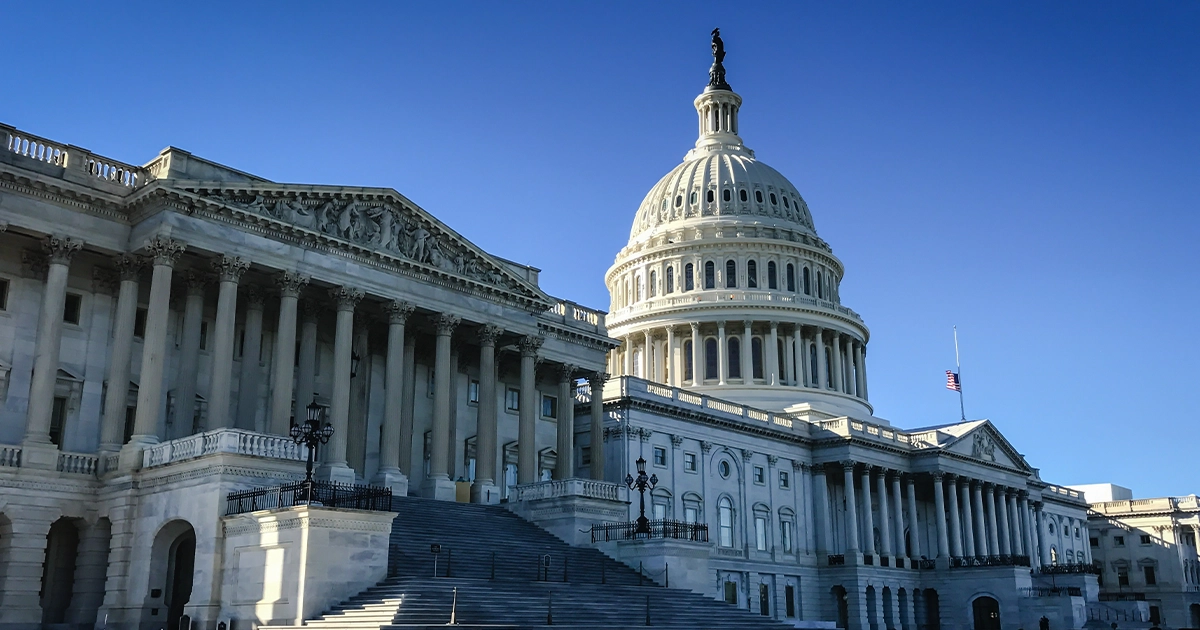
Funds for Nursing Workforce Development and Nursing Research Are at Risk
A fiscal year 2027 budget proposal released this month would cut federal funding for nursing workforce development by nearly 70%, eliminating almost every Title VIII grant program that supports faculty development, education, and workforce recruitment. For nursing program leaders facing enrollment pressures and faculty shortages, the implications of this are far-reaching.
The process by which the federal budget is drafted and approved is complex and circuitous. But an understanding of its general course is important for nursing education leaders because it directly shapes which resources are available to support students, faculty and programs.
Federal funding streams, including Title VIII grant programs, are all determined through annual budget decisions made by Congress. Funding increases can expand services and access, while cuts can force programs to make tough tradeoffs or lead to program elimination altogether.
Policies tied to federal spending signal national education priorities and can influence everything from educator training programs to student financial aid. ATI is monitoring the budget process closely and advocating for funding to expand opportunities for nursing education.
How Does the Federal Budget Process Work?
The “regular order” federal budget process ordinarily begins each February, when the president submits a proposed budget to Congress. This proposed budget outlines the administration’s spending, revenue and policy priorities.
In the spring, Congress develops its own proposal through a budget resolution drafted by the Budget Committees in the U.S. House of Representatives and Senate. (This proposal may be influenced by or ignore the administration’s proposal.) The congressional budget resolution sets overall spending and revenue targets to guide the development of appropriations legislation.
Assuming regular order, Congress will pass 12 annual federal discretionary spending bills focused on the operations of federal agencies and the programs, projects and activities they carry out. Ideally, the House and Senate reach an agreement on these bills and send them to the president for signature before the end of the fiscal year (FY) on Sept. 30. However, in recent years, this has rarely been the case. If a budget has not been approved by both chambers by that date, Congress can either pass a continuing resolution (CR) to maintain funding at current levels while an agreement is worked out, or allow the federal government to shut down.
At the time of this writing in April 2026, members of Congress are developing a proposed budget for FY 2027. ATI is closely monitoring what the budget proposal includes and what it would cut.
What ATI is Monitoring and How It Impacts Nursing Education
Due to its strong relevance to healthcare and healthcare education, ATI is paying close attention to the Labor, Health and Human Services, Education, and Related Agencies (Labor-HHS) appropriations bill in both the U.S. House of Representatives and the Senate.
The Labor-HHS appropriations bill includes funding for Title VIII Nursing Workforce Development Programs, one of ATI’s priority federal policies. These grant programs focus on strengthening the nursing workforce by addressing education, practice, recruitment, and retention.
Examples of grant programs within Title VIII include the:
- Nurse Faculty Loan Repayment Program
- Nurse Education, Practice, Quality, and Retention Program
- Advanced Nursing Education Program
- Nurse Corps Scholarship and Loan Repayment Programs.
The president’s proposed budget would make significant cuts to nursing-related programs under Labor-HHS. In its FY27 request, the Trump Administration proposes a 12.5% (or $15.8 billion) reduction in funding for the Department of Health and Human Services (HHS), including a nearly 70% (or $212.837 million) decrease in funding for Title VIII Nursing Workforce Development Programs.
This would be accomplished by eliminating all Title VIII programs except for the Nurse Corps Scholarship and Loan Repayment Program. The budget request also proposes a 30% (or $59.308 million) decrease in funding for the National Institute of Nursing Research and a 2.9% ($2.3 billion) decrease in discretionary funding for the Department of Education overall.
Given that many communities, particularly rural areas, are challenged by nursing workforce shortages and a slowed pipeline, these cuts would be devastating to efforts to build a robust nursing workforce. ATI is calling on Congress to reject the president’s proposal and fully fund Title VIII grant programs.
Add Your Voice to ATI’s Advocacy Efforts for Nursing Education
Now that you are aware of the process and the financial implications of the proposed federal budget for FY27, consider these questions:
- Does your program benefit from Title VIII funding?
- How closely are you following the congressional budget process?
- In what ways have you been impacted by federal funding cuts or government shutdowns?
We seek your answers to these questions. Your real‑world experiences help set our priorities and strengthen our advocacy on your behalf.
ATI invites you to engage with our Government Relations and Public Affairs team to share your real-world perspective. Your experiences help us deepen policymakers' understanding of, and support for, nursing education. Our voices are stronger when we advocate together.
Please email ATI Senior Director of Government Relations Kurt Burkum to discuss the impact of federal funding, share your perspective and experience, and help us ensure that adequate federal funding support for nursing education and workforce development is secured.
About the author: Kurt Burkum is the Senior Director of Government Relations for Ascend Learning. ATI is an Ascend Learning brand. With more than 20 years of experience in education policy, workforce development, public affairs, and policy research, Kurt works with policymakers, educators, and industry leaders on issues that shape learner success and workforce readiness. His writing explores the legislative, regulatory, and policy trends affecting postsecondary education, career pathways, credentialing, and professional training.