
Nurse Educator Blog
State of Nursing Education
The State of Nursing Education is the authoritative ATI series examining key issues affecting today’s academic nursing programs, deans and faculty.
Explore All ArticlesStrengthening Clinical Readiness in Nursing Students

A Research-Backed Holistic Approach Is Within Reach
The primary goal of every academic nursing program is to graduate new nurses who are ready to hit the ground running. But that ability — clinical readiness — is getting more challenging to achieve. The transition from classrooms to today’s clinical settings can be, as one nurse researcher put it, “a reality shock.”1 Many nurse managers concur, reporting a mismatch between new grad expectations and workplace reality.
Nursing faculty have distinct insights into this challenge. They report that many of today’s students struggle to translate theory into practice and to recognize patterns in complex clinical scenarios. Solving this is made harder by limited early visibility into learning gaps and by a lack of flexible, scalable student support.
To meet such challenges, leaders and nurse educators are seeking ways to:
- ensure student mastery of complex concepts and knowledge areas
- build strong clinical judgment and critical thinking skills
- provide flexible learning support that meets student needs outside the classroom.
These outcomes are within reach. Recent research and new approaches to building clinical readiness provide the foundation for actions that can help more programs graduate students who are better prepared for nursing practice.
A New Perspective on Clinical Readiness Is Emerging
Recent studies2-17 suggest that a reframing of clinical readiness is warranted. Rather than a summary of exam scores and clinical hours, readiness for practice is now better understood as multidimensional and jointly owned.
Across these studies and essays, several authors argue that fixed clinical-hour requirements should not serve as a primary marker of readiness. Many urge a thoughtful implementation of competency-based evaluation instead — an effort under way at many institutions due to the AACN Essentials. Multiple authors go further, emphasizing that academic preparation and the postgraduation environment both influence whether new nurses succeed.3-7,9,13,15
Collectively, the research reframes readiness as a shared responsibility. Nursing programs lay the foundation, but practice environments play a critical role in helping graduates succeed in the workforce.
For educators, this perspective is encouraging. If readiness is multidimensional and develops over time, the goal is not to produce a "finished" nurse at graduation. Rather, it is to help students enter practice with the knowledge, judgment, confidence and learning habits they need to continue developing.
Before exploring what this looks like in practice, a deeper look at the recent research can provide more context.
What Constitutes Clinical Readiness?
Ask five educators how their program determines clinical readiness and the results are likely to contain commonalities and differences. Does a standard, widely accepted definition of clinical readiness exist? Not exactly.
Researchers have, however, developed formal conceptual definitions for it. In their 2024 concept analysis incorporating 75 studies, Konlan and Damiran identified 4 core attributes of clinical readiness (see below).6
The authors found that self-assurance, typically built through a combination of professional skills, communication skills, and self-management skills, is the most important characteristic of clinical readiness. This conclusion supports the shift toward a holistic view of clinical readiness.
Within that view, professional skills remain paramount, and clinical judgment stands out as the most significant struggle. One study found that new nurse graduates consistently demonstrated gaps in recognizing clinically significant changes in patient status and in applying systematic, evidence-based thinking under pressure.5 Across the literature, the ability to identify cues, analyze patterns, and respond appropriately — the core of clinical judgment — is where new nurses most often fall short.3,5,7,14
Readiness Challenges in the Academic Environment
Because clinical readiness is shaped by a range of individual, educational and environmental factors, the greatest potential for impact is in the academic environment, where new nurses are challenged, shaped and inspired.
But programmatic challenges can contribute to competency gaps between what graduating students achieved during nursing school and what employers expect.14 These gaps persist even among graduates of well-regarded programs, a sign of how difficult it is to build complex clinical skills within a traditional curriculum.13
Meeting this challenge is harder without structured resources and support. Teaching complex content, such as pathophysiology, at the depth students need requires instructional approaches that go beyond lecture. Building clinical judgment requires opportunities to practice it repeatedly and in varied ways. And providing the customized, responsive support struggling students need is difficult when faculty already are stretched thin.
Innovations That Meet the Moment
New innovations from ATI directly address common readiness challenges, aligning with evolving holistic views of developing clinical readiness and grounded in research-backed instructional principles. Get acquainted with them and see feedback from faculty users below.
Making Complex Content Click: Engage® Pathophysiology
- Engage Pathophysiology uses videos, podcasts, animations and narrative text to simplify one of the most complex courses in a nursing curriculum.
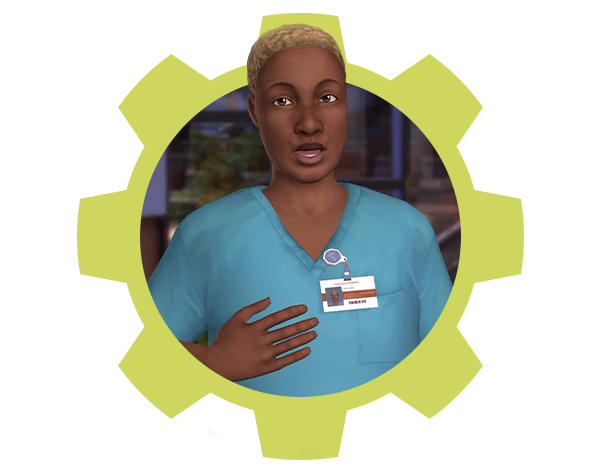
- This approach directly addresses one of the most persistent readiness challenges identified in the literature: helping students build a deeper understanding of foundational science so they can recognize patient conditions, interpret clinical changes, and exercise stronger clinical judgment.
“This is really going to help nursing students learn. It provides information in simple terms with videos, podcasts, the narrative, and animations, so they can get a better grasp of pathophysiology.”
— Rose Ferrara Love, DNP, MSN, MBA, RN, CNE, BC, Adjunct Faculty, Community College of Allegheny County
Cementing Foundational Learning: The Engage® Series
- The Engage Series, covering 9 content areas as of July 2026, is a multimodal active learning environment that provides detailed insights for faculty. Educators see what students are interacting with, where they are struggling, and can respond accordingly. Within Engage Fundamentals, faculty can now use new virtual applications, client education activities, and 3D visualizations to enhance the development of clinical readiness in students.
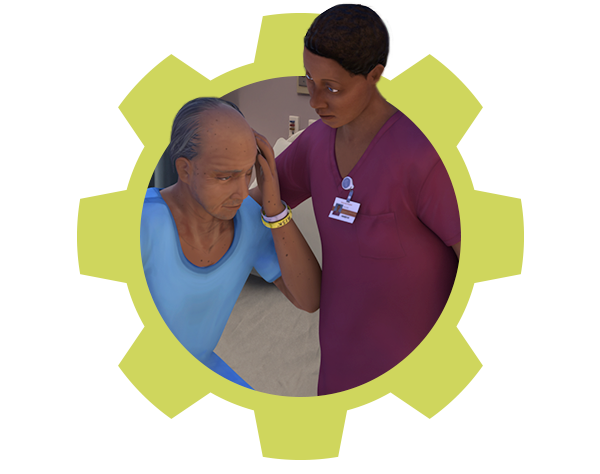
- This approach to teaching foundational content and providing detailed insights to faculty addresses one of the most consistent readiness concerns cited in the literature: the need to identify learning gaps before they become practice gaps.2,6,13
“Using the Engage Series, we can see the outcomes of our students. We can view analytics and see what students are struggling with, what they're asking questions about, and tailor our lectures to create better outcomes for the NCLEX and our patients.”
— Bethany Gifford, MSN, RN, Nursing Instructor, Central Community College
Supporting Students Wherever, Whenever They Need It: Claire AI®
- Claire AI provides round-the-clock personalized student support drawn from course content — including the ability to text and receive answers instantly. Claire AI shows faculty which questions and topics are most common, enabling them to adjust lectures or provide targeted remediation.
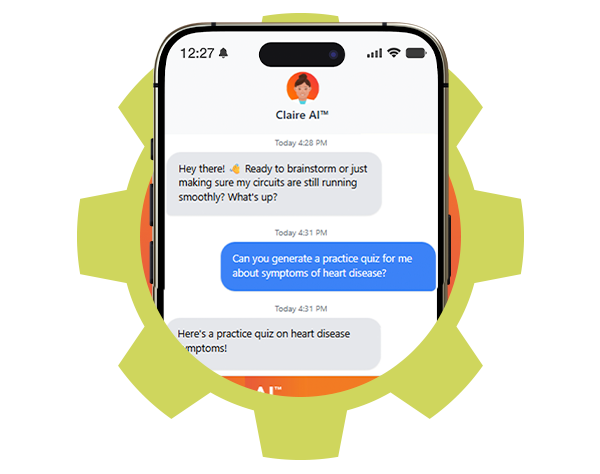
- This approach addresses a reality in nursing education: Learning does not stop when class ends. By providing immediate, personalized support whenever students study, Claire AI helps reinforce classroom instruction and give guidance when faculty aren’t available.
“This generation of students learn completely differently. They do not listen to lectures, so you need active involvement and easy access. They want the technology. You need Claire AI on your phone.”
— Kimberly White, PhD, MSN, RN, Director, School of Nursing, West Virginia Wesleyan College
A New Clinical Readiness Lens: Building a Holistic Skill Set
A growing body of research now frames clinical readiness as a combination of knowledge, judgment, confidence, communication, self-management, and support. This shift creates new opportunities for academic nursing programs. By cementing student understanding of complex concepts, providing engaging multimodal learning experiences, and extending support beyond traditional classroom boundaries, programs can ensure more students are ready to enter the nursing workforce with confidence and competence.
Together, Engage Pathophysiology, the Engage Series, and Claire AI help programs cement foundational learning, strengthen clinical judgment, and provide personalized support beyond the classroom, helping students develop the holistic skill set today's practice demands.
Visit this page to find out how Engage® Pathophysiology, Engage Fundamentals, the Engage Series, and Claire AI® help nursing programs strengthen foundational knowledge, build clinical judgment, and provide personalized support beyond the classroom.
References
- Zipf A. The New Graduate RN Speaks, Again: A Mixed Methods Study. American Journal of Nursing. 2025;125(4):22-34.DOI: 10.1097/AJN.0000000000000047
- Grubaugh M, Africa L, Mallory C. Where Do We Go From Here? The Impact of COVID-19 on Practice Readiness and Considerations for Nurse Leaders. Nurse Leader. 2021;20(2):134-140. https://doi.org/10.1016/j.mnl.2021.12.016
- Hasanah U, Malini H, Fernandes F, et al. Readiness of nursing students for clinical practice: a literature review. Healthcare in Low-Resource Settings. 2024;12. https://doi.org/10.4081/hls.2024.13014
- Jihye K, Kyungmi L. Readiness for practice among nursing college graduates: a cross-sectional correlation study. SAGE Open Nursing. 2025;11. https://doi.org/10.1177/23779608251371497
- Kennedy JA, Laskowski P, Breyman B. Clinical judgment in new nurse graduates: identifying the gaps. International Journal of Nursing Education and Scholarship. 2023;20(1):20220112. https://doi.org/10.1515/ijnes-2022-0112
- Konlan KD, Damiran D. Clinical readiness for practice of nursing students: a concept analysis. International Journal of Environmental Research & Public Health. 2024;21(12):1618.https://www.mdpi.com/1660-4601/21/12/1610
- Masso M, Sim J, Halcomb E, Thompson C. Practice readiness of new graduate nurses and factors influencing practice readiness: a scoping review of reviews. International Journal of Nursing Studies. 2022;129:104208. https://doi.org/10.1016/j.ijnurstu.2022.104208
- Matlhaba KL, Khunou SH. Transition of graduate nurses from student to practice during the COVID-19 pandemic: integrative review. International Journal of Africa Nursing Sciences. 2022;17:100501. https://doi.org/10.1016/j.ijans.2022.100501
- McGarity T, Monahan L, Acker K, Pollock W. Nursing graduates' preparedness for practice: substantiating the call for competency-evaluated nursing education. Behavioral Science. 2023;13(7):553. https://doi.org/10.3390/bs13070553
- Ohue T, Ohue Y. Impact of COVID-19 pandemic–induced changes in clinical practicums on the mental health of newly graduated nurses: longitudinal study. JMIR Nurs. 2025;8:e79556. https://doi.org/10.2196/79556
- Ojala H, Kuivila H-M, Mikkonen K, Jarva E, Juntunen J. Factors associated with newly graduated nurses' work engagement: systematic review of quantitative studies. J Adv Nurs. 2026;82(3):1947-1972. https://doi.org/10.1111/jan.17069
- Powers K, Montegrico J, Pate K, Pagel J. Nurse Faculty Perceptions of Readiness for Practice Among New Nurses Graduating During the Pandemic. Journal of Professional Nursing. 2021;37(6):1132-1139. https://pmc.ncbi.nlm.nih.gov/articles/PMC8648075/
- Prosen M, Ličen S. Bridging competency gaps for newly graduated nurses through micro-credentials: an interpretative descriptive qualitative study. BMC Medical Education. 2025;25:843. https://doi.org/10.1186/s12909-025-07419-w
- Purabdollah M, Zamanzadeh V, Ghahramanian A, Valizadeh L, Mousavi S, Ghasempour M. Competency gap among graduating nursing students: what they have achieved and what is expected of them. BMC Med Educ. 2024;24:546. https://doi.org/10.1186/s12909-024-05532-w
- Reebals C, Wood T, Markaki A. Transition to practice for new nurse graduates: barriers and mitigating strategies. Western Journal of Nursing Research. 2022;44(4):416-429. https://doi.org/10.1177/0193945921997925
- Swan BA, Jones KD, Hayes R, Kaligotla L, McDermott C, Rodriguez J, McCauley L. Reject the "practice readiness myth": ask if systems are ready for nursing graduates instead. Nursing Outlook. 2024;72(5):102181. https://doi.org/10.1016/j.outlook.2024.102181
- Wynne K, Mwangi F, Onifade O, Abimbola O, Jones F, Burrows J, et al. Readiness for professional practice among health professions education graduates: a systematic review. Front Med. 2024;11:1472834. https://doi.org/10.3389/fmed.2024.1472834
About the author: Michelle Perron is a healthcare writer and editor who develops evidence-based content for ATI Nursing Education. With more than 20 years of experience in healthcare publishing, journal development, and editorial management, she helps connect nursing research and education best practices to today's faculty needs.